


What Flowers Last the Longest?
Jul 17, 2026
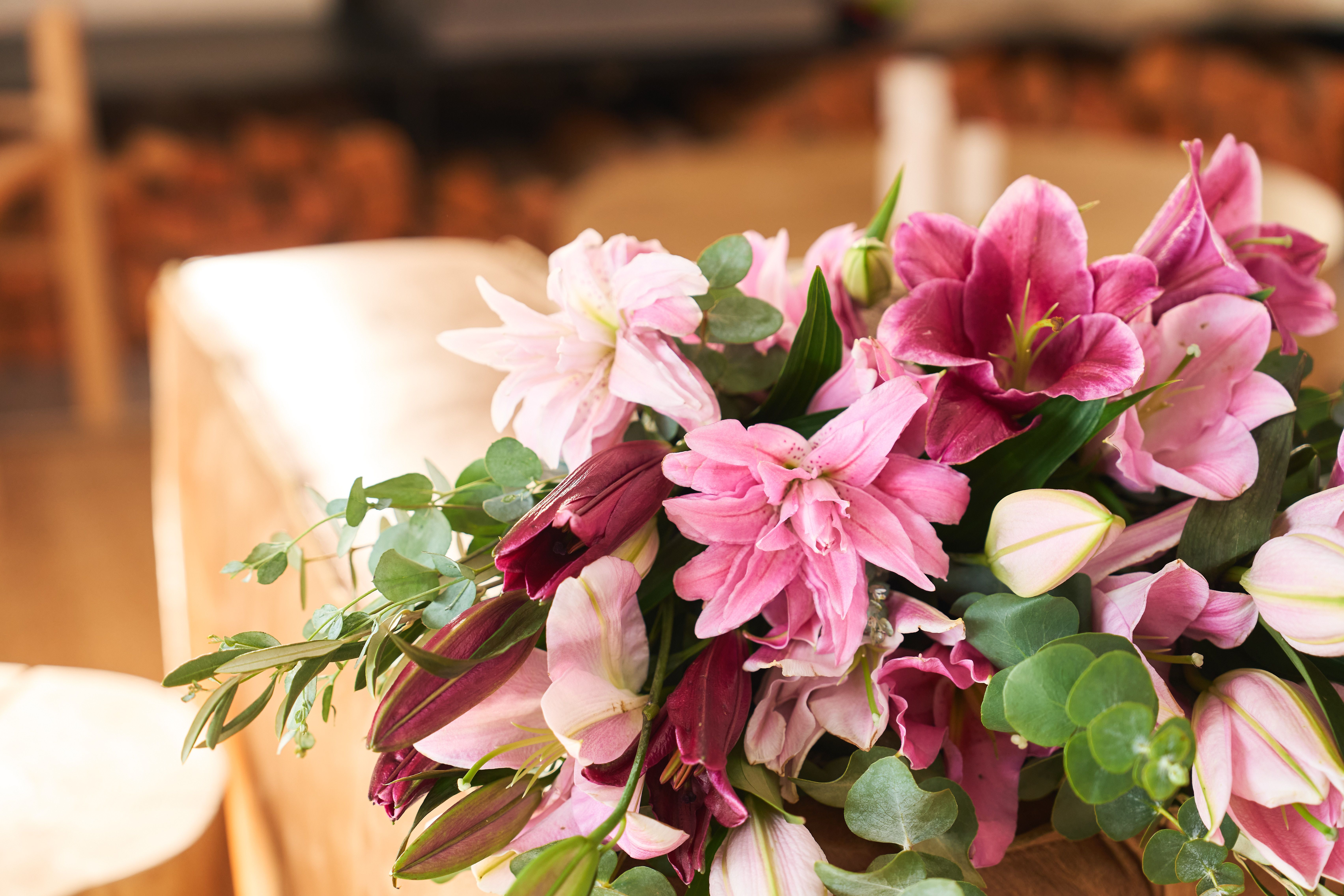
One of the questions we get asked most often is: What flowers last the longest?
It’s a fair question. Once they’re in a vase, flowers really only have two jobs: be beautiful and stick around as long as possible. The first part comes naturally. The second is trickier, because flowers are perishable—and annoyingly unwilling to tell you exactly how long they plan to stay.
The truth you’re probably not going to want to hear is that carnations, chrysanthemums, alstroemeria, and some lilies are among the longest-lasting cut flowers. With the right care, many can look beautiful for 10 days to two weeks—and sometimes even longer.
If you’re like my mom, you can apparently keep them for over a month by putting them in the fridge and only bringing them out when company comes over. But I’m not sure all of us have Beth Stembel–level commitment when it comes to keeping flowers fresh. ;)
What Affects How Long Cut Flowers Last?
But flower variety is only part of the equation. How fresh the flowers were when they were cut, how they were transported, how much time they spent out of water, the temperature they were kept at, and what you do with them once they arrive all make a huge difference.
In other words, even a naturally long-lasting flower won’t perform its best if it’s been sitting somewhere hot and thirsty for days. Which makes sense, right? We wouldn’t either.
But let’s talk about the workhorses of the flower world and see if I can convince you to love them for more than just their vase life.
Which Cut Flowers Last the Longest?
Carnations Take Gold: Often 2 to 3 Weeks
Carnations have gotten a bad rap for so many years. If there’s one flower people tell us is their very least favorite, it’s almost always a carnation.
We’ve been on a mission to change that for years, but alas, we’ve fallen short so far. Maybe we can change that now? Fingers crossed. Why do we care so much? Because carnations today are not the carnations people remember.
When most people think of a carnation, they picture the stiff, overly bright orangey-red, white, or unnaturally dyed flowers handed out at school dances or tucked into grocery-store bouquets as an afterthought.
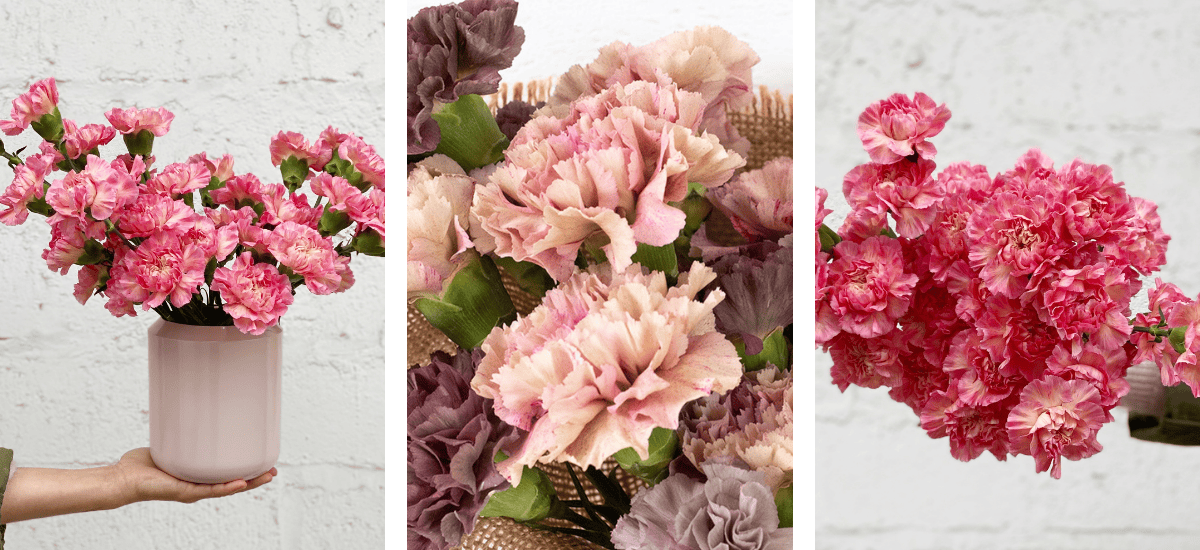
But today’s carnations are a completely different story. The breeders should win an award—although they probably already have—because carnations now come in the prettiest blushes, peaches, caramels, dusty pinks, mauves, and more muted, antique colors than you can imagine.
Their petals are ruffled and textural, some varieties are even fringed, and we cannot say enough about their longevity. They hold up incredibly well to just about anything Mother Nature throws their way and can often last two to three weeks with proper care.
That’s why we don’t think a beautiful carnation is a consolation flower—the one you get only when you can’t afford a garden rose or ranunculus. They truly deserve to be the star of the show. They have a huge petal count, which is usually what draws people to peonies, ranunculus, and garden roses in the first place. And they just look so incredibly happy, like little firework bursts.
So really, what’s not to love? They’re incredibly sturdy—unlike a ranunculus or gerbera daisy—super affordable, often costing about 20% of what a peony does, and you can bet your bottom dollar they’ll be among the last good-looking flowers left in your vase. They don’t just have strength. They have resilience. And really, what better traits are there?
So yes, they’ve changed a lot since prom. And thankfully, most of us have too, right?
Chrysanthemums Take Silver: Around 2 Weeks
Thank goodness chrysanthemums have an easier nickname of the short-and-sweet variety: mums. They’re another flower that deserves way better publicity. Maybe we should introduce them to our publicist? ;)
Unfortunately, a lot of people hear “chrysanthemum” and immediately picture the giant porch plant they bought in October, forgot to water, and quietly disposed of sometime around Christmas. But believe me, cut mums grown for flower production are completely different.
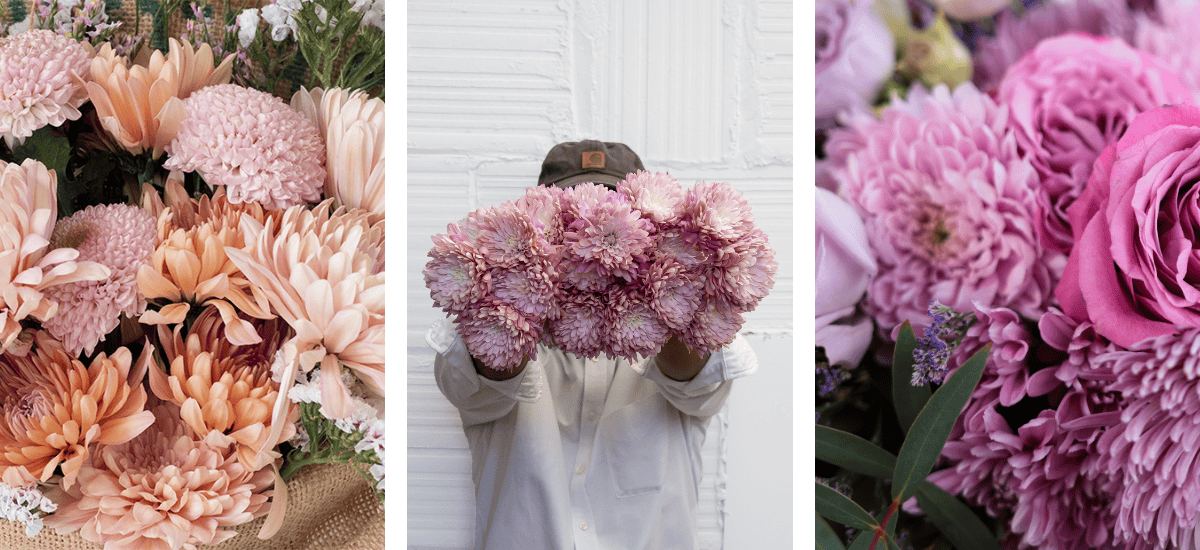
And they don’t all have those neon green centers you see at the local market. Newer designer varieties are not only stunning—they’re incredibly interesting, with huge petal counts, fun shapes, and equally fun names: button, spider, cushion, football, pompon, spoon, and quill mums.
A fun little fact: you’ll often hear them called disbuds, but that actually describes the way they were grown, not the type or variety of flower.
They’re also total workhorses. They add so much texture and personality to an arrangement and come in some amazing muted colors that are hard to find in other flower varieties. And the very best part—the reason they earn silver status—is that many mums can last around two weeks in a vase. They’re often still standing long after some of the showier flowers have bowed out.
They may not always be the first flower you notice, but they’re frequently the last one you throw away. And there’s something to be said for that.
Alstroemeria Takes Bronze: Up to 2 Weeks
Please don’t sleep on her. She’s the quiet overachiever. And don’t we all want to root for that?
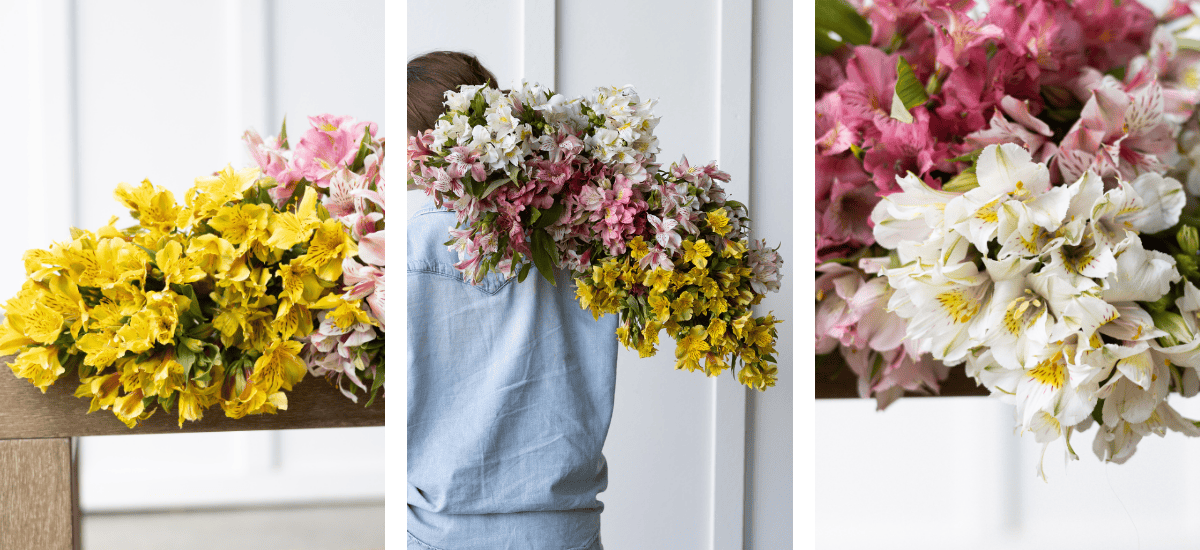
Alstroemeria—often called Peruvian lily—is one of the hardest-working flowers in a bouquet. And she’s one I didn’t love until fairly recently, so I almost never used her. Then one day I saw a whole bunch of them in a vase, and they looked like butterflies dancing around. I promise I was completely sober and I am probably the least fru-fru person out there. Ever since then, I’ve been hooked and want to use them in just about every bouquet.
Each stem usually has multiple blooms and buds, so the flowers continue opening over time instead of doing everything all at once. That helps them last longer than many other flowers. They come in literally more than a thousand varieties and colors, add volume without feeling heavy, and can often last up to two weeks.
Basically, they quietly do their job without demanding a lot of attention, which is a quality I deeply appreciate in both flowers and people.
One thing to know: the foliage on alstroemeria may start yellowing before the flowers are finished blooming. That’s how long they last. So don’t assume the whole stem needs to go. Just remove the yellowing leaves and give the blooms a little more time. They’re often not done yet and somehow just keep getting better.
A trait I hope to have in life too, which might be part of why I’ve grown to love them more as I’ve learned about them.
Honorable Mention: Lilies Can Last Up to 2 Weeks
Beautiful, elegant, long-lasting—and accompanied by one very important warning.
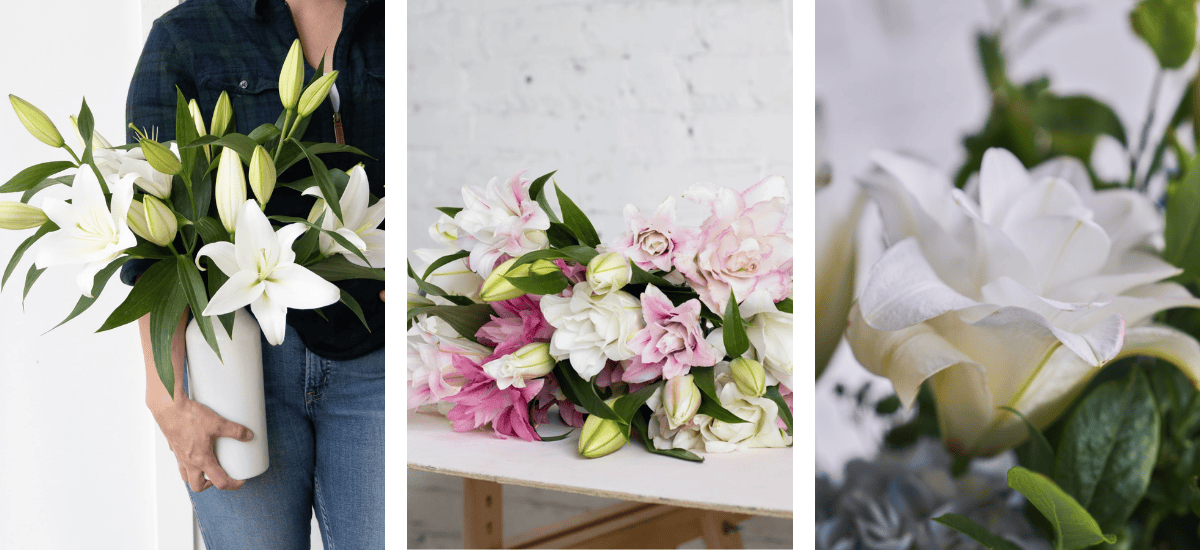
Large, fragrant hybrid lilies like Casa Blanca and Stargazer are some of the longer-lasting lilies because their buds open gradually, one after another. You don’t get the entire show on day one, which means the arrangement keeps changing and blooming over time.
They’re also some of the most elegant flowers, in my opinion. One of my favorite things to do is grab 10 stems and put them on the table at home. Somehow, even when the house is completely torn up—can we say teenagers?—I still feel completely put together in the best possible way.
And if I actually change the water and the house isn’t too hot, I can usually get two full weeks out of them. Another win.
They’re bold, sculptural, beautifully fragrant, and very thirsty, so keep a close eye on the water level. They’re also enthusiastic pollen producers. As each bloom opens, gently remove the pollen-covered anthers if you can. Otherwise, one innocent brush against the flower and your white shirt may suddenly look like you’ve been seasoning it with turmeric.
One very important tip, though: do not send lilies to your cat-loving friends. Lilies are extremely dangerous to cats, so choose a confirmed cat-safe option instead, like roses, sunflowers, orchids, or gerbera daisies.
How Long Do Roses Last in a Vase?
We love roses as you probably know because we use beautiful roses all the time. But roses have somehow managed to convince the entire world that they are the automatic answer to every flower-related question.
Romantic flowers? Roses. Birthday flowers? Roses. Anniversary flowers? Roses. Forgot something important and are now attempting emergency relationship repair? Definitely roses.
But are roses the longest-lasting flowers? Not by a long shot.
They’re not the shortest-lived flowers either, but the vase life of a rose can vary widely depending on the variety, freshness, growing conditions, and how it was handled before it reached you.
Some roses open slowly and last beautifully for a week, or maybe even 10 days if you’re a flower wizard. Others, especially garden varieties, give you several spectacular days and then complete their assignment.
But that doesn’t mean they aren’t worth sending. And that brings me to the most important part of this entire answer. See? I still can’t write anything succinctly. :)
Are the Longest-Lasting Flowers Always the Best Choice?
Of course we all want flowers to last. You paid for them, and if there’s anything I know well, it’s that flowers aren’t inexpensive - especially these days with tariffs and fuel and labor costs, which makes them a bit of a true luxury these days.
They’re so beautiful, so naturally you want to enjoy them for as long as possible. But vase life isn’t the only way to measure the value of a flower.
Why Shorter-Lived Flowers Can Still Be Worth Choosing
And here’s the slightly inconvenient truth: some of the flowers people love most—peonies, garden roses, ranunculus, and anemones—usually have shorter vase lives than sturdier flowers like carnations, mums, or alstroemeria.
They are also, in my opinion, some of the prettiest flowers on the planet. So sometimes you have to decide what matters most. Do you want a flower that quietly goes the distance, or one that walks into the room, steals the entire show, and leaves a little sooner?
I wish the answer were always both. I would also like peony season to last 12 months and garden roses to behave like carnations, but flowers remain frustratingly unwilling to take my business advice.
That doesn’t mean the shorter-lived flowers aren’t worth choosing. Watching a peony open from a tight little bud into a bloom the size of a salad plate—and then drop its petals into a pile that looks like the most beautiful confetti you’ve ever seen—is completely magical. Garden roses have layers, fragrance, and movement that are impossible not to love and that standard roses just don’t.
Ranunculus look almost too perfect to be real. You can’t quite understand how a gracefully long, thin, slightly soft stem can hold up all those petals—until the weight of all that beauty inevitably makes it give out. And anemones, with their dark little centers and the way they close back up at night before welcoming the light again, almost look like they’re stretching out on the beach. They can make an entire arrangement go from mundane to truly special!
These flowers may not always be the last ones standing, but they’re often the ones everyone remembers. So yes, longevity matters. But so do beauty, seasonality, fragrance, rarity, and the way a particular flower makes someone feel.
How to Choose Flowers Based on Vase Life
Sometimes you choose the practical flower. Sometimes you choose the breathtaking one. And sometimes the very best bouquet gives you a little of both.
That’s why our mixed bouquets include flowers from each category, so they can hopefully wow you and stick around for a while too.
There’s something magical about watching a tight peony bud open into a flower the size of a salad plate. It may not last two full weeks, but during its time in the vase, it’s doing a lot. It’s not quietly decorating the room. It’s putting on a show.
Some flowers are beautiful because they go the distance. Others are beautiful because they’re fleeting, seasonal, or completely unforgettable while they’re there. Neither is necessarily better. It just depends on what matters most to you—or to the person receiving them.
Do they care most about longevity? Do they have a favorite flower? Would a particular color make them happy? Is there a flower connected to a memory, like the peonies their grandmother used to grow? Would they rather have one week of something extraordinary or two weeks of something more dependable?
There’s really no wrong answer.